



Monastic Tonsures
After the corresponding time of instruction and testing, the novice carries out the total offering of life. He consecrates himself to God, the Eternal One, with body and soul, in time and in eternity. This takes place when he first performs the “metanoia” before the elder and the brethren, that is, when he makes the eternal vows. Then he receives the consecration from God, from the hand of his elder, through the grace and power of the Holy Spirit.
There is only one mystery of monasticism; yet there are three stages of consecration, corresponding to particular stages of the spiritual path:
1.) the consecration of the Holy Garment (Ράσοευχή),
2.) the consecration of the Little Schema (Μικρόσχημα), and finally
3.) the consecration of the Great Holy Angelic Schema
(Ἅγιο Μεγάλο καὶ Ἀγγελικὸ Σχῆμα).
The consecration of the Holy Garment (Ράσοευχή) is already a fully valid monastic tonsure and should be bestowed only after a corresponding period of testing. It presupposes the eternal vows and monastic conduct of life and is performed in the context of an all-night vigil.
It corresponds to the state of the apprentice, who has clearly decided and walks the path of the monks with seriousness, yet is still at the beginning. There are monks who remain in this state all their lives and become holy men through obedience, humility, and selfless service. From the beginning, the monk, as an “angel in the body” and “messenger of God on earth”, is placed in the eschatological struggle of the spiritual powers of which the holy Apostle Paul speaks (Eph. VI, 12). The garment is of strong symbolic significance; in biblical tradition it stands for the bodily side of the human being. At the same time, however, it expresses his spiritual attitude; even more, in its veiling it reveals the essence.
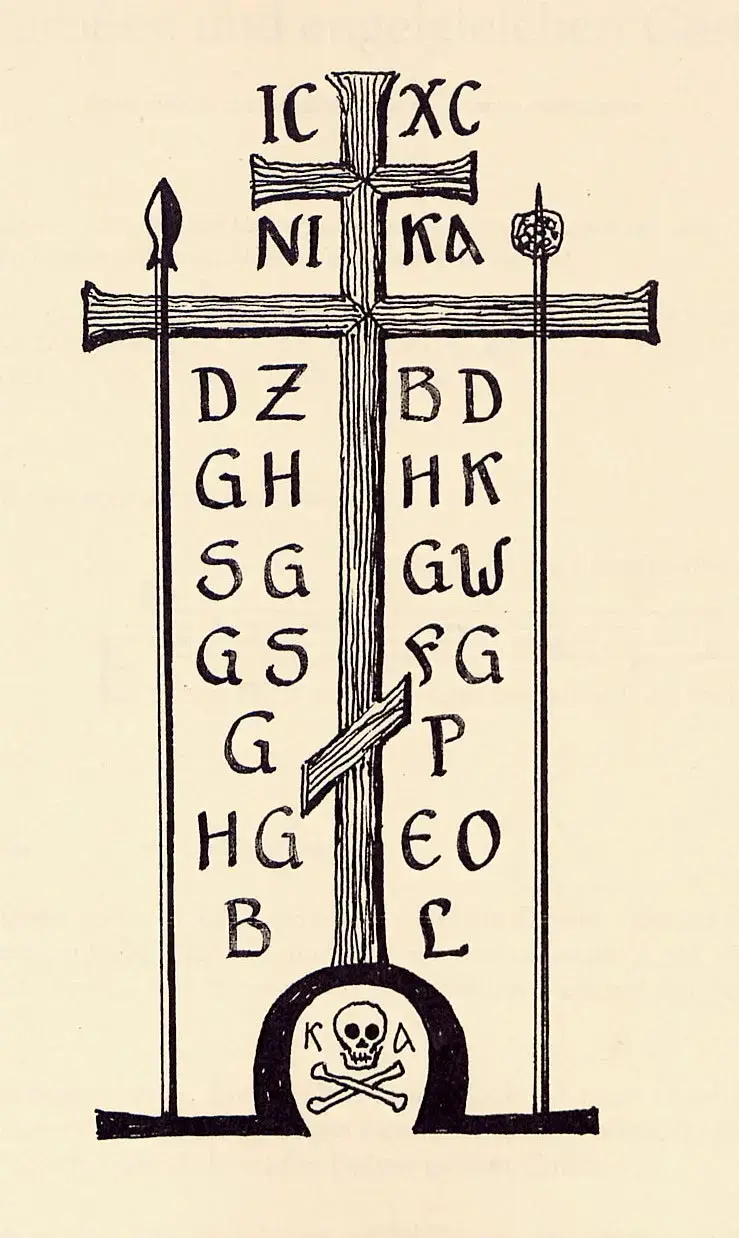
The Little Schema (Μικρόσχημα) is the second stage of consecration. The rite is more extensive and embedded in the Divine Liturgy. In addition to the Holy Garment, the monk now receives the breast shield (pallium). He is thereby marked as a spiritual warrior; his breast shield bears the Cross of Jesus Christ as a sign of victory. This consecration lets the archetype emerge more sharply and should be given only to one who can bear and radiate such sharpness. A monk of the Little Schema should be able to sustain essential areas of monastery life independently and be firmly grounded in holy Tradition, as in old craftsmanship a good journeyman understands his craft and is able to work independently.
Finally, the consecration of the Great Holy Angelic Schema (Ἅγιο Μεγάλο καὶ Ἀγγελικὸ Σχῆμα), as it is called in full, marks mastery. It is the highest stage of consecration. The monk receives the complete spiritual armor, the great pallium, which is worn like a priestly stole and bears further holy signs, as well as the polystavrion. This consecration is given only to experienced monks who are wholly at home in holy Tradition and able to guide and train other monks. According to ancient Tradition, only a monk in the Great Schema can tonsure and lead other monks. All elders and abbots of the Holy Mountain Athos possess this consecration, and without this consecration, and of course also without the spiritual reality, discernment, and experience presupposed by it, one cannot lead other monks. Thus monasticism is prevented from hardening into abstract ideology and external rule-keeping. And it is ensured that the ancient forms are filled and borne by the living Spirit, that the original character of monasticism as mystery and path of deification is preserved and carried forward. Only where this is truly given can one rightly speak of the “eternal stream of grace”.